BrocaMorphological_EvolutionSyntax
Morphological Evolution of Broca’s Area and the Origins of Human Language
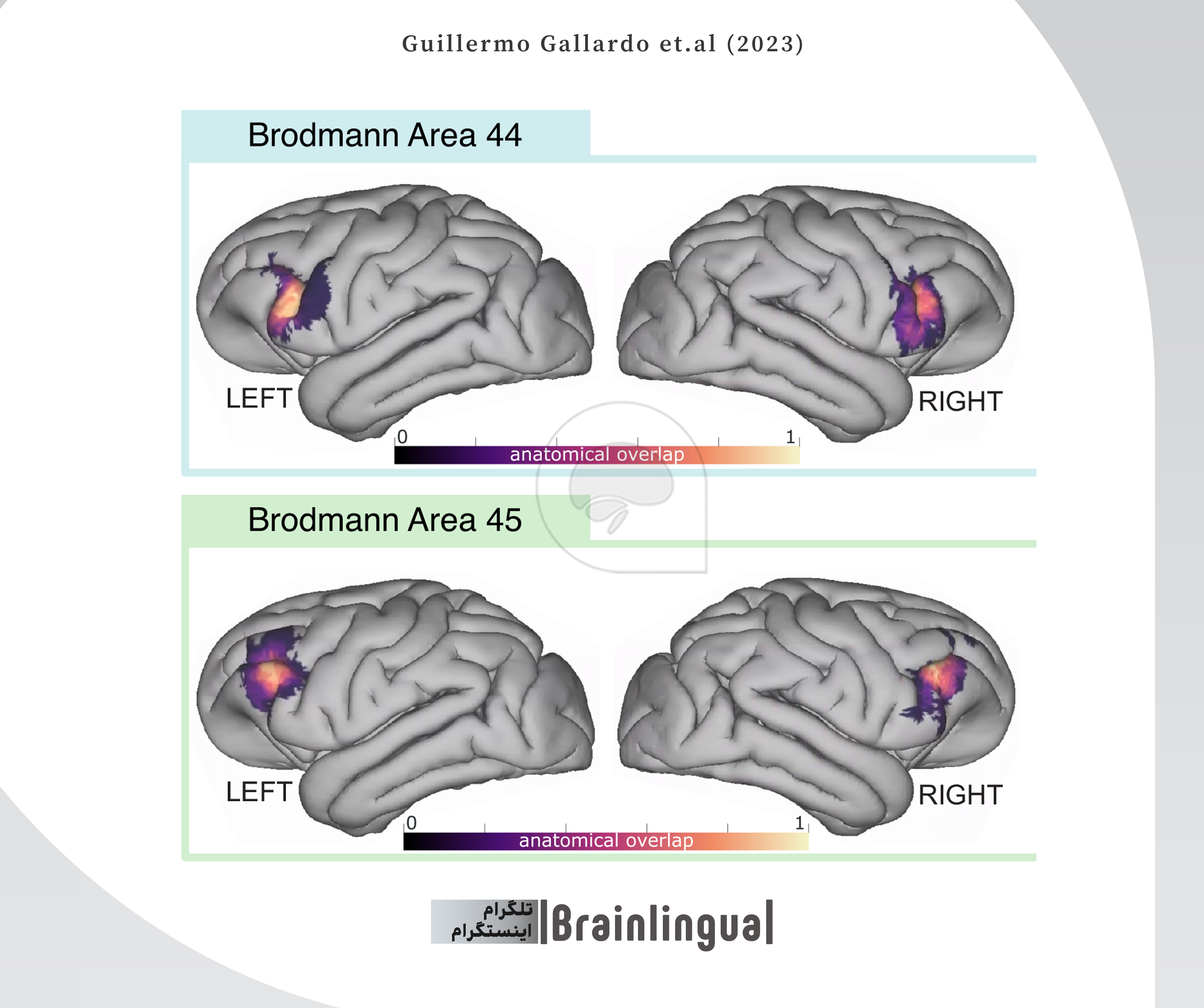
Language is one of the defining features of the human species and is supported by a cortical network, particularly Broca’s area, which includes Brodmann areas 44 and 45 (BA44 and BA45). For decades, scientists have debated a fundamental question: Did language evolve from primitive motor and action-related systems, or is it an entirely independent cognitive ability? Answering this question requires understanding how the structure of Broca’s area changed throughout evolution, from our last common ancestor with primates to modern Homo sapiens. In a study investigating phylogenetic (evolutionary) changes in Broca’s area, researchers sought to determine how BA44 and BA45 in humans differ from those of our closest living relatives, chimpanzees, in terms of size, asymmetry, and spatial organization, and how these changes may have enabled complex functions such as syntax.